Talking about wine is talking about passion. It’s diving into a universe where history, geography, science, and emotion come together in a single glass. Anyone who begins to explore the world of wine—whether through tasting, studying, or simple curiosity—quickly realizes they are entering a much vaster territory than they ever imagined: a territory of living culture, unexpected encounters, and deep connections.
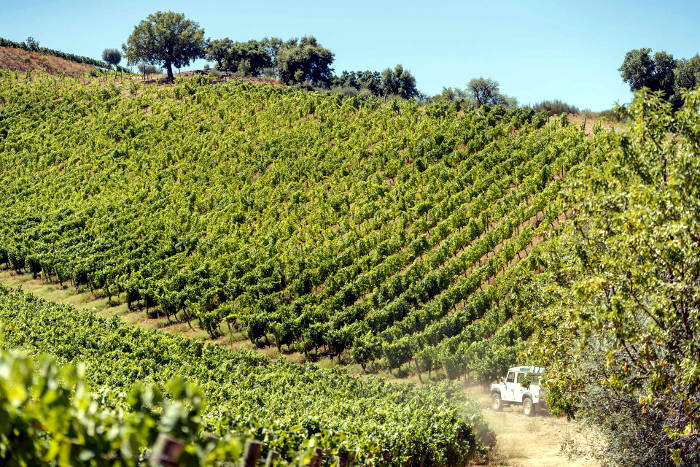
Tasting a wine is, in a way, traveling. Traveling to the region where it was produced, to the climate that shaped it, to the hands that crafted it. As we delve deeper into understanding a wine, we also discover the traditions, the gastronomy, and even the social and economic challenges of its makers. A wine from the Vinhos Verdes region speaks not only of grapes—it speaks of freshness, of youth, and of a deep bond with nature and its roots. A wine from the Douro carries the strength of the landscape, the wisdom of centuries, and the weight of a grand history—perfectly captured by Miguel Torga, who described the Douro as an “excess of nature.” And a wine from Trás-os-Montes? It speaks of the mountains, of authenticity, and of a beauty yet to be fully discovered, almost elemental, like the tales of Berta Nunes or the inner landscapes of Camilo Castelo Branco.
And when we arrive in France, in the Champagne region, we find in the wine the reflection of a rich land, a passionate culture, and the pride of generations who turned winemaking into a true art. It is no coincidence that Balzac wrote of wine as "the intellectual part of a meal," or that Hemingway said that "wine is one of the most civilized things in the world." Each bottle holds a fragment of history, a breath of culture, a piece of the human spirit.
But wine is not just geography or liquid literature—it is also emotion and connection. It is one of the rare products that has accompanied humanity since Antiquity, not only as a source of pleasure but as a symbol of communion, celebration, and sharing. The tradition of drinking wine, with moderation and awareness, has built lasting bonds—among friends, between generations, across cultures. From ancient times, when it was deemed essential for soldiers on campaign, to today, when it serves as a silent ambassador of authentic regions and quality production.
Wine teaches us about patience, about balance, about respect for the land. And above all, it teaches us to value the present moment—that instant when the glass is raised, eyes meet, and conversation flows. How many projects have been born around a table? How many ideas have been sealed with a toast? How many memories have unfolded around a shared bottle?
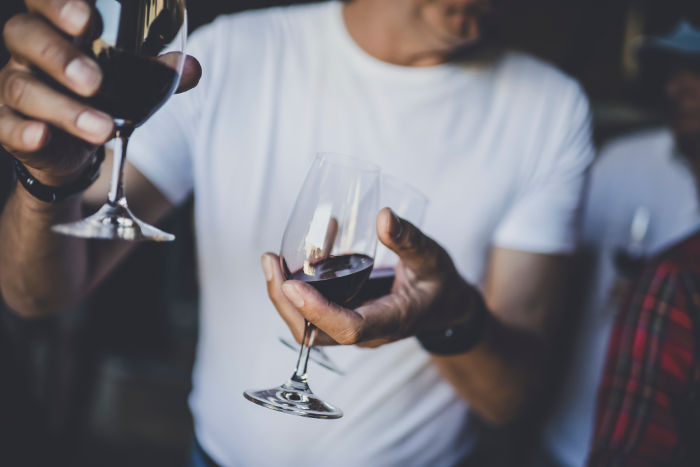
Perhaps we should look at wine through the eyes of those who see beyond the glass—as an aggregator of cultures, a spreader of knowledge, a bridge between past and future. It has been motivation for troops, inspiration for poets, comfort for the lonely, and cause for celebration among peoples. Today, more than ever, it is also a powerful tool for promoting regions, local knowledge, and authenticity.
Because this is where winemaking belongs—and must remain: rooted in the land, in identity, and in what is truly good.
So let’s raise our glasses—to the future, to culture, to sharing. And, if possible, always with a glass in hand.